Spiritual Awakening
Not the Instagram version. The actual neurological, psychological, and energetic process documented across every contemplative tradition that ever mapped it.
Spiritual awakening is a specific shift in the structure of awareness. Not a feeling, not a phase, not a belief acquired. The shift is reported with striking consistency across cultures, centuries, and contemplative traditions that had no contact with each other. It has stages, symptoms, predictable difficulties, and a recognizable trajectory. It is also widely misrepresented in popular culture.
This page covers what awakening actually is, the stages every serious tradition mapped, the physical and psychological symptoms that show up, the dark night of the soul, and how to navigate the process without getting lost in it.
What Spiritual Awakening Actually Is
Spiritual awakening, in the technical sense the traditions use, is the recognition that one's true nature is not the self-image, the personality, the body, or the stream of thoughts. The recognition is not intellectual. Plenty of people can repeat the words. The shift the traditions are pointing at is direct, experiential, and structurally permanent once it stabilizes.
Different traditions name the same event differently. Hindus call it moksha or self-realization. Buddhists call it kensho (initial recognition) or satori (deeper recognition), eventually nirvana. Sufis call it fana. Christian mystics called it theosis or union. The Daoists call it the realization of the Way. The vocabularies differ. The underlying event is consistent enough that practitioners from one tradition can usually recognize the descriptions of practitioners from another.
What it is not:
- Not a religious conversion. Conversion is adoption of new beliefs. Awakening is a structural shift in the perceiver, independent of belief content.
- Not a peak experience. Peak experiences are temporary altered states. Awakening produces stable shifts in baseline experience.
- Not a personality upgrade. Awakened people remain recognizably themselves. The shift is in the relationship to the personality, not the personality itself.
- Not a moral transformation. Behavior usually changes downstream of awakening, but the recognition itself is structural, not ethical.
- Not the end of suffering. Awakened people still get sick, lose people they love, and face the normal difficulties of being alive. The relationship to suffering shifts; suffering itself does not stop.
The serious traditions all emphasize this distinction between the genuine recognition and its many simulacra. Most of what passes for "awakening" in modern spirituality is one of the simulacra.
The Recognizable Stages
Every detailed map of awakening (Theresa of Avila's interior castle, the Buddhist progress of insight, the yogic stages of samadhi, the Sufi maqamat) describes a sequence. The vocabulary varies. The trajectory is consistent.
Specific sequencing and full protocol: Redacted, Chapter 17.
- Stirring. An unprompted dissatisfaction with the conventional life arrangement. A sense that something is missing or wrong, even when the external circumstances are good. The traditions describe this as the soul beginning to wake. Modern psychology might call it existential disquiet.
- Seeking. Active pursuit of the missing thing. Reading, practice, teachers, communities. The risk at this stage is spiritual materialism, collecting experiences and identities instead of doing the work.
- Initiation. A breakthrough event. Sometimes a single dramatic experience, sometimes a quieter recognition that arrives whole. The traditions vary on whether this is best described as something happening or as something falling away.
- Dark Night. The deconstruction phase. What was built on the conditioned self begins to dissolve. Often disorienting, sometimes depressive. The traditions are emphatic: this stage is not pathology. It is the work continuing. See the dark night section below.
- Integration. The new way of being settles into the ordinary life. The dramatic phenomena fade. The structural shift remains. The person looks like a person again, but the inside has reorganized.
- Stabilization. The recognition becomes the baseline rather than a state to be returned to. This is what the traditions call "established in the Self" or "the secondless." It can take decades.
The progression is not linear. Practitioners often cycle through stages multiple times, with each pass cutting deeper. The traditions describe the work as a spiral rather than a ladder. The same territory gets walked again at a different depth.
Physical Symptoms
A real awakening process produces measurable physical effects. The traditions documented these carefully. Modern practitioners report the same patterns. The body is part of the process, not separate from it.
- Sleep changes. Either reduced sleep need (often dramatically, four to five hours feeling sufficient), or much deeper sleep with vivid dreams. The pineal gland is implicated in both directions.
- Energy shifts. Surges of energy traveling through the body, sometimes pleasant and warming, sometimes overwhelming. The kundalini tradition describes these specifically.
- Temperature changes. Spontaneous heat sensations, sometimes intense. Cold spells. The autonomic nervous system reorganizing.
- Sensory acuity. Colors sharper, tastes more vivid, sounds more distinct. The reverse can also occur: temporary numbing or dulling as the system recalibrates.
- Appetite changes. Either reduced appetite, or the body's preferences shifting toward simpler, cleaner foods. Many practitioners spontaneously reduce or eliminate meat, alcohol, and processed food during active phases.
- Pressure or tingling at specific centers. The crown of the head, the brow center, the heart, the navel. Corresponds to the chakra system anatomically.
- Heart rhythm shifts. Sustained heart-brain coherence states. Sometimes irregular rhythms during transitions.
- Spontaneous physical movements. Involuntary swaying during meditation, postural shifts, sometimes specific yogic mudras arising without intention. The kundalini kriyas.
These symptoms can be confused with medical conditions and should be discussed with a physician if severe or persistent. The traditions also recommend ruling out actual illness before assuming a symptom is spiritual. Most of the symptoms are real and benign, but the differential diagnosis matters.
Psychological Symptoms
The psychological symptoms are the most easily misread. Some of them resemble mental health conditions closely enough that practitioners have been wrongly medicated. The differences are subtle but consistent.
- Depersonalization that is not distressing. A sense of being a witness to one's own life rather than the actor. Clinical depersonalization is accompanied by distress and a desire for the normal sense of self to return. Awakening depersonalization is accompanied by a sense of relief or freedom.
- Witness consciousness. A stable observing awareness that watches thoughts, emotions, and reactions without identifying with them. Different from dissociation, which is a defense mechanism. Witness consciousness is integrative, not protective.
- Emotional release. Long-suppressed emotional material surfacing. Sometimes overwhelming. Sometimes appearing as crying spells, anger waves, or grief storms that have no proximate cause. The traditions describe this as emotional purification.
- Identity shift. The familiar sense of "I" begins to feel constructed rather than given. Sometimes alarming during the transition. Eventually stabilizes into a new baseline.
- Loss of interest in former pursuits. Things that mattered intensely stop mattering. Careers, relationships, hobbies, identifications. Sometimes temporary, sometimes permanent. The traditions warn against making major life changes during this phase.
- Increased sensitivity. To other people's states, to environmental energies, to social dynamics. Crowds become more taxing. Quiet becomes more nourishing. Many practitioners adjust their lives accordingly.
- Spontaneous insights. Recognitions arriving fully formed, often about long-standing problems or stuck patterns.
- The witness witnessing itself. An advanced phase. The witness consciousness becomes aware of its own nature, and the seer-seen duality collapses. This is what the traditions call recognition proper.
The traditions emphasize working with a qualified teacher during these phases, both for the validation that the process is normal and for help distinguishing between real awakening symptoms and actual psychological difficulties that need professional attention. Both can co-occur. The distinction matters.
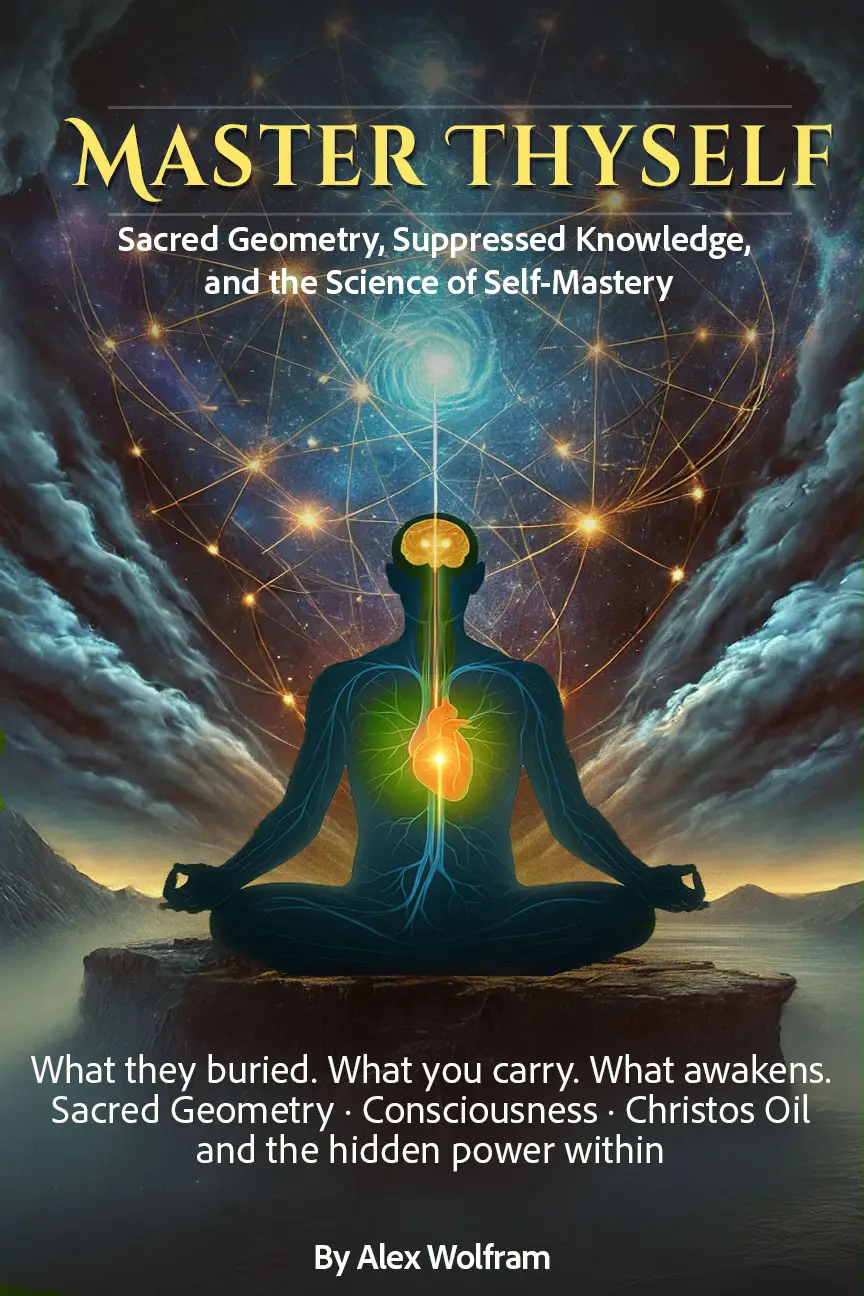
The Full Trajectory.
The full awakening sequence in Master Thyself spans chapters 17 (the inner antichrist that must be dethroned), 21 (the Christos Oil tradition and its anatomy), and 22 (sovereignty as the integrated outcome). Mapped through six traditions. The map that lets the reader recognize where they are.
The Dark Night of the Soul
The dark night of the soul is the most misunderstood phase of awakening. The phrase originates with the 16th-century Spanish Carmelite mystic Saint John of the Cross, whose poem and accompanying commentary The Dark Night remains the classical Western description of the phenomenon. Modern usage has watered it down to mean any rough patch. The original meaning is much more specific.
The dark night is the deconstruction phase that follows initiation. The structures of the conditioned self that were giving meaning, motivation, and identity begin to dissolve. What replaces them has not yet arrived. The result is a period of disorientation, often experienced as depression, anxiety, loss of meaning, spiritual dryness, and the sense that the previous spiritual practices have stopped working.
Saint John of the Cross distinguished two dark nights:
- The dark night of the senses. The earlier phase. The pleasure and comfort that had been found in spiritual practice dries up. Meditation feels empty. Prayer feels mechanical. The taste for the spiritual life is removed.
- The dark night of the spirit. The deeper phase. The very sense of being a self that has a relationship to God or to truth begins to dissolve. The practitioner can feel abandoned by everything they trusted. This is the deeper purification.
Both dark nights are described by Saint John as necessary stages of growth, not failures or punishments. The dryness is the work continuing. The structures that needed to dissolve are dissolving. What feels like loss is actually clearing.
The critical distinction. The dark night and clinical depression can present similarly but are not the same. The dark night, properly experienced, leaves the practitioner functional, even if dry. Clinical depression impairs function and includes specific symptoms (suicidal ideation, severe insomnia or hypersomnia, inability to perform daily tasks) that warrant professional attention. The two can also co-occur. Anyone in significant distress should be evaluated medically. The traditions never recommended refusing professional help on theological grounds.
Every Tradition's Version
The fact that the same process is described, in similar stages, across traditions that had no contact with each other, is the strongest evidence that something real is being mapped. The vocabularies differ. The phenomena are the same.
- Christian mysticism. Theresa of Avila's seven mansions, Saint John of the Cross's dark night, the Cloud of Unknowing's purification, Eckhart's Abgeschiedenheit (detachment). The Catholic contemplative tradition mapped this in extreme detail.
- Hindu yoga. Patanjali's eight limbs culminating in samadhi. The progressive samadhi states (savitarka, savichara, nirvichara, nirvitarka, ananda, asmita, dharmamegha). The kundalini path with its specific stages.
- Buddhism. The progress of insight in Theravada (sixteen knowledges of insight, with specific predictable difficulties at each stage). The Mahayana bodhisattva stages (ten bhumis). Zen kensho and satori.
- Sufism. The maqamat (stations) and ahwal (states). The Naqshbandi lataif system. Fana (annihilation in God) and baqa (subsisting in God) as the integrated outcome.
- Daoism. The internal alchemy stages: building the foundation, the small circulation, the great circulation, the return of the spirit to the void, the void returning to the Dao.
- The Gnostic tradition. The ascent through the planetary spheres, the recognition of the inner spark, the return to the Pleroma. Mapped in the Gnostic gospels that survived suppression.
The convergence is too consistent to be cultural diffusion alone. Different cultures, working independently, mapped the same trajectory in the same order. The most parsimonious reading is that they were observing the same phenomenon. The map of awakening is built into human consciousness the way the map of physical development is built into the human body.
How to Navigate It
Navigating an active awakening process is not the same as triggering one. The triggering side is conventional contemplative practice. The navigating side is the unique work of being inside an active process without getting lost in it.
- Maintain ordinary life. Keep paying bills, showing up to work, eating regularly, sleeping when possible. The traditions are unanimous: the urge to abandon ordinary life during active awakening is usually a mistake. The integration happens in ordinary life, not outside it.
- Find an experienced teacher. Not optional. Someone who has walked this path and integrated it. Books and self-direction are insufficient at deeper stages.
- Reduce stimulation. Cut back on input that overstimulates: news, social media, dramatic content. The system needs quiet to integrate.
- Spend time outdoors. Nature regulates the nervous system in ways that have no good substitute. Walking, sitting, breathing outdoor air.
- Sleep. When possible. When not possible, rest. The traditions are emphatic about this.
- Eat simply. The body's preferences will often shift toward simpler food. Follow the body's lead within reason. Avoid extreme dietary changes during the most active phases.
- Use fasting as the tradition prescribed it. Periodic, moderate, not extreme. Aligned with lunar timing per the sacred secretion calendar.
- Continue practice. Even when it feels empty. Especially when it feels empty. The dark night phases are when practice is most needed.
- Don't make major life decisions. Wait until the active phase settles before changing careers, relationships, or living situations. The post-awakening view of these decisions is often very different from the in-the-storm view.
- Seek medical evaluation if symptoms become severe. The traditions never recommended replacing medicine with spiritual practice. Both can be present at the same time.
The process takes years. The traditions estimate full integration in decades. Patience, sustained practice, and the right help distinguish those who complete the integration from those who get stuck at a particular phase.
The reason spiritual awakening keeps being mistaken for crisis is that the body and mind go through real reorganization, and modern medicine has no diagnostic category for that. A genuine spiritual awakening is not the same as anxiety, depression, or psychosis, even if some symptoms overlap. The difference is direction. A clinical disorder degrades function over time without intervention. A spiritual awakening reorganizes function around a different center, and the reorganization, while disorienting, increases capacity and clarity once it stabilizes. The distinction matters because treating spiritual awakening as pathology often makes it worse, while supporting it with rest, grounding practices, and informed company often resolves it cleanly.
The full protocol, the specific sequencing, and the why behind each step are covered in the book: Redacted, Chapter 22.
Master Thyself, Chapters 17, 21, 22Read The Path to Sovereignty →Frequently Asked Questions
What is spiritual awakening in simple terms?
A recognizable shift in the structure of awareness in which one's true nature becomes clear as something other than the personality, the body, and the stream of thoughts. The recognition is direct and experiential, not intellectual. It has stages, symptoms, and a predictable trajectory documented across every serious contemplative tradition.
What are the signs of spiritual awakening?
Common signs include increased witness consciousness (watching one's thoughts and emotions without being identified with them), sleep pattern changes, energy phenomena in the body, increased sensitivity to environments and other people, emotional release of long-buried material, shifts in interests and priorities, and a sense that the familiar self is becoming transparent.
How long does spiritual awakening take?
The initial recognition can happen in a moment or arise gradually over years. Integration of the recognition into ordinary life takes years to decades. The traditions describe the full process as multi-decade work, not a weekend retreat outcome.
What is the dark night of the soul?
A specific phase of the awakening process, named by Saint John of the Cross, in which the structures of the conditioned self begin to dissolve before the new way of being has stabilized. Often experienced as depression, dryness, loss of meaning, or spiritual emptiness. The traditions treat it as necessary purification, not pathology, while distinguishing it carefully from clinical depression that requires professional attention.
Is spiritual awakening dangerous?
Forced or rushed awakening can produce significant psychological difficulty, including symptoms that resemble anxiety disorders and dissociation. This is why the traditions emphasize slow, supervised practice and the value of an experienced teacher. The natural unfolding, supported by ordinary life and good guidance, is challenging but not dangerous in the medical sense.
What is the difference between spiritual awakening and religious conversion?
Religious conversion is the adoption of a new set of beliefs and practices, usually within a specific tradition. Spiritual awakening is a structural shift in the perceiver that occurs independently of belief content. A person can convert without awakening, and a person can awaken without converting. The two are related but not the same.
Chapters 17, 21, 22. The Path to Sovereignty.
The full awakening trajectory from initial stirring through dark night to integration, mapped through six traditions. The anatomy, the practices, the warnings, and the recognizable outcome.
Get Your Copy on Amazon