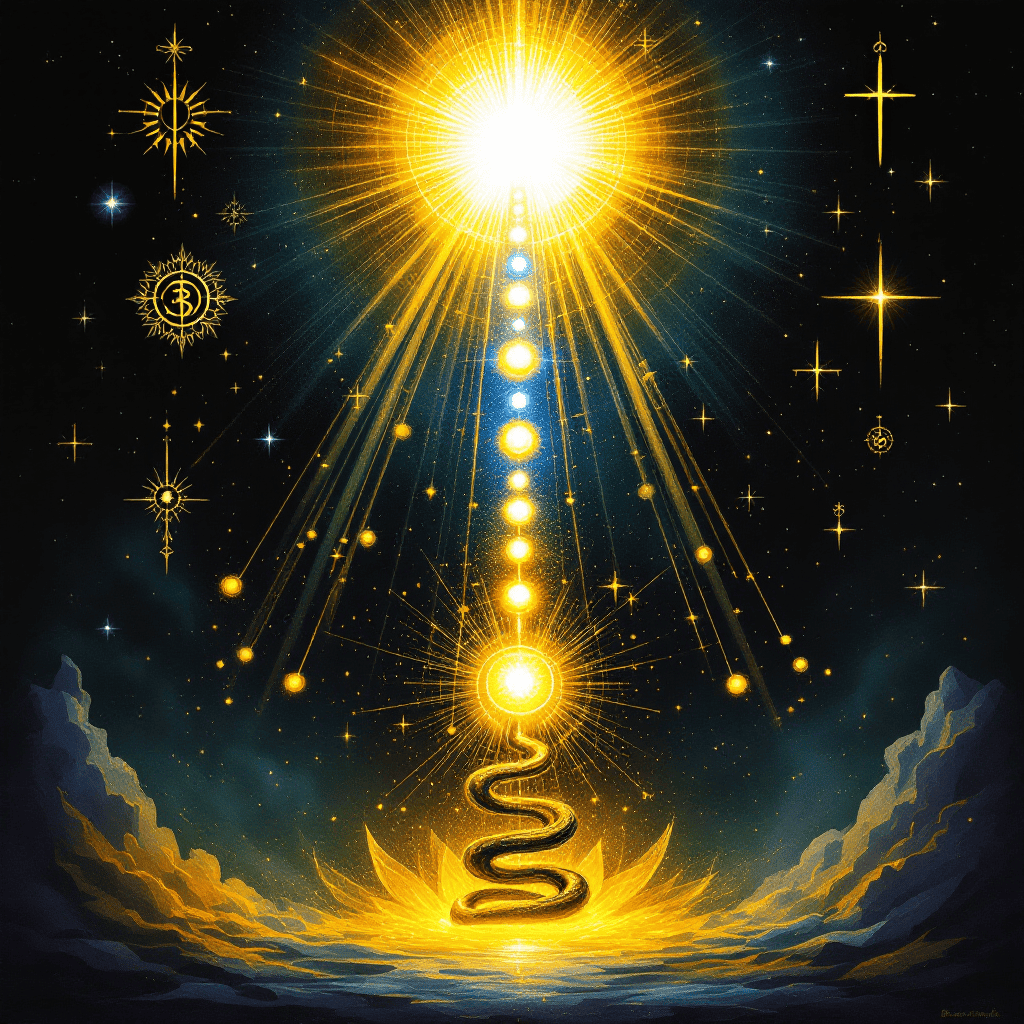
Kundalini vs sacred secretion is not a choice between competing systems but a recognition that East and West preserved the same inner map under different names. The yogic tradition called it kundalini, the coiled serpent fire rising through the chakras (the seven energy centers along the spine mapped in yogic anatomy). The Christian mystics and Gnostic lineages encoded it as the sacred secretion, the Christos oil ascending the spinal column toward crown illumination. Both describe a biological current that, when cultivated through discipline and purity, transforms consciousness from fragmentation into coherence.
This convergence is not metaphor. The cerebrospinal fluid pathway that modern neuroscience maps through the spine and brain ventricles is the same channel both traditions identified as the river of life. The endocrine glands that regulate mood, perception, and vitality sit precisely where the chakras were mapped thousands of years before anatomy textbooks named them. The 33 vertebrae of the human spine echo across Masonic degrees, the years of Christ’s ministry, and the rungs yogis climbed toward samadhi (the state of meditative absorption and union with the divine). Different languages. One architecture.
Kundalini: The Serpent Fire of the East
In Sanskrit, kundalini means the coiled one. Yogic texts describe it as a dormant energy resting at the base of the spine, coiled like a serpent beneath the root chakra. When awakened through pranayama (yogic breathwork techniques), meditation, mantra, and the disciplined redirection of sexual energy, this inner fire begins its ascent. It rises through the central channel called sushumna, flanked by two spiraling currents: ida, the lunar, cooling, feminine channel on the left, and pingala, the solar, heating, masculine channel on the right. As kundalini climbs, it activates and purifies each of the seven chakras in sequence, burning away distortion and opening perception at every level.
The goal is not merely energetic activation. It is union. When kundalini reaches the crown chakra at the top of the head, it merges with Shiva, the transcendent consciousness, completing the circuit between matter and spirit. This union is described as samadhi, a state of illumination where individual identity dissolves into boundless awareness. The body becomes a temple. The spine becomes the ladder. The breath becomes the key.
Practitioners report sensations of heat, light, spontaneous movement, and profound inner stillness. Some describe visions, dissolving boundaries, or a flood of compassion. The experience varies, but the architecture is consistent. Kundalini is not belief. It is a process, repeatable across cultures and centuries, governed by the same biological structures regardless of the tradition naming it.
Sacred Secretion: The Western Inner Anointing
The sacred secretion, also called the Christos oil, is the Western name for the same ascending current. Early Christian mystics, Gnostic initiates, and Essene communities understood that the body produces a sacred fluid within the brain’s claustrum (a thin sheet of neural tissue deep in the brain’s center). This secretion descends into the cerebrospinal fluid and, when preserved through fasting, breathwork, and the transmutation of desire, ascends the spinal column in a monthly cycle aligned with lunar and astrological timing.
The oil’s journey mirrors the gospel narrative. It is conceived in the upper chamber of the brain, descends through the Jordan River of the spine, is tested in the wilde